
Volunteering – a good idea?
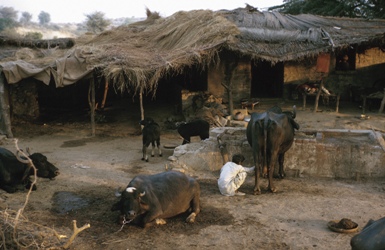
To volunteer is to work for no pay in order to help people or an organisation. Sometimes young people take a year off – a gap year – to do this. Now a national charity suggests that the gap-year industry caters for the needs of participants rather than those they claim to help. Can you answer these questions after listening to the report?
(the questions do not follow the listening chronologically so you may need to listen more than once before attempting them. You can open the podcast in a new window by right clicking on the attachment and choosing this option)
1. [Multiple choice]
The Guardian Social Affairs Correspondent is called …..
Answers for Quiz [1].
- 1. Louise Ward.
- 2. Lucy Wood.
- 3. Lucy Woodward.
- 4. Lucy Ward. (correct)
2. [Multiple choice]
A gap-year student, or a gapper is a person who goes away for a while, usually to another country ..
Answers for Quiz [2].
- 1. between the ages of 18 and 25. (correct)
- 2. between leaving school and going to university.
- 3. between leaving school and leaving university.
- 4. between starting school and going to university.
3. [Multiple choice]
(S) he usually completes work in the country of destination for very little or no pay.
Answers for Quiz [3].
- 1. True. (correct)
- 2. False.
4. [Multiple choice]
(S) he usually pays quite a lot of money to organisations which set up projects abroad which (s)he takes part in.
Answers for Quiz [4].
- 1. True. (correct)
- 2. False.
5. [Multiple choice]
………………………. of young people decide to take a year out in this way every year.
Answers for Quiz [5].
- 1. Dozens
- 2. Scores
- 3. Hundreds
- 4. Thousands (correct)
6. [Multiple choice]
It’s calculated that about………………of young people between the ages of 18 and 25 go away for a gap year.
(‘About one in four’ – so 25% of an age group.)
Answers for Quiz [6].
- 1. 15%
- 2. 20%
- 3. 25% (correct)
- 4. 30%
7. [Multiple choice]
The word ‘gap’ can mean all of the definitions below. What does it mean here?
(To bridge a gap is to connect two things or to make the difference between them smaller.)
Answers for Quiz [7].
- 1. A break.
- 2. An opportunity.
- 3. An unfilled period of time. (correct)
- 4. A space.
- 5. A difference.
8. [Multiple choice]
The international development charity mentioned is called
(VSO is short for Voluntary Service Overseas.)
Answers for Quiz [8].
- 1. BSO.
- 2. PSO.
- 3. VSO. (correct)
9. [Multiple choice]
It appears doing some of these projects in developing countries can be ….
Answers for Quiz [9].
- 1. damaging for gappers.
- 2. damaging for the communities they work with.
- 3. damaging for gappers and the communities they work with. (correct)
- 4. damaging for the organisations which set up the work projects.
10. [Multiple choice]
If you go away for a gap year you usually stay away for most of a year.
(The reporter says there is some discussion about how much constitutes a gap year – how long the time has to be ‘to count’. It becomes clear some projects last as little as 2 weeks before teenagers go travelling, perhaps for only a few days afterwards.
It doesn’t count = it is not good enough to be considered valid or valuable
Eg I applied for a job in a restaurant, but the manager said my experience making sandwiches didn’t count as restaurant experience.
)
Answers for Quiz [10].
- 1. True.
- 2. False. (correct)
11. [Multiple choice]
VSO says some work of the work completed is ‘spurious’. This means ….
Answers for Quiz [11].
- 1. illegal.
- 2. not what it appears to be. (correct)
- 3. undervalued.
- 4. unpaid.
12. [Multiple choice]
VSO believes that there are some worthwhile and very well-organised projects, but ………. are not.
Answers for Quiz [12].
- 1. a low percentage
- 2. some
- 3. many
- 4. a high proportion (correct)
13. [Multiple choice]
The average gap-year student has ….
(The reporter says that school-leavers have very few skills, little work experience, and not much to offer except enthusiasm and energy.)
Answers for Quiz [13].
- 1. some useful skills to offer.
- 2. considerable work experience.
- 3. a lot to offer.
- 4. little more than enthusiasm and energy. (correct)
14. [Multiple choice]
The project where a gap-year student might be working ….
(They may barely know they’re coming, won’t know what to do with them, and because students may have no specific skills, the projects don’t know how to use them.)
Answers for Quiz [14].
- 1. usually knows they’re coming.
- 2. usually has little idea how to use them. (correct)
- 3. often knows exactly what to do with them.
- 4. knows how to match their specific skills to the project.
15. [Multiple choice]
Employing a local person
(Employing a local person would provide him / her with work and an income, so would boost the local economy. A local would be more likely to continue to contribute to a project after (s)he was trained, so would be useful for longer. It appears that an average young foreigner may be of no particular benefit to some of these projects abroad.)
Answers for Quiz [15].
- 1. would save the communities money.
- 2. would save the communities effort.
- 3. would be more useful and would make more economic sense. (correct)
16. [Multiple choice]
To suffer culture shock means
(To feel extremely tired after a long journey by air is to have/suffer jet lag.)
Answers for Quiz [16].
- 1. to be shocked at the way people in a developing country behave.
- 2. to have a feeling of confusion when visiting a country or place that you do not know. (correct)
- 3. to feel shocked that many people do not understand your own culture.
- 4. to feel extremely tired after a long journey by air.
- 5. to be disgusted at the way everyone abroad behaves.
17. [Multiple choice]
To get your head round something is an informal phrase meaning …
(They have to ‘get their heads round working in very difficult circumstances’ – means they have to absorb and adapt to uncomfortable facts.)
Answers for Quiz [17].
- 1. to manage to squeeze your head into a small space.
- 2. to manage to curl your neck round an object.
- 3. to adjust your thinking to accommodate something unfamiliar. (correct)
- 4. to master something difficult.
18. [Multiple choice]
In general volunteers
Answers for Quiz [18].
- 1. need little support.
- 2. are sometimes given lots of support.
- 3. need more support than they are given currently. (correct)
- 4. are given more support than they actually need.
19. [Multiple choice]
Local people learn a lot from these young people arriving in their midst.
Answers for Quiz [19].
- 1. True.
- 2. False. (correct)
20. [Multiple choice]
Young people often learn a lot from living in these communities, far from home.
Answers for Quiz [20].
- 1. True. (correct)
- 2. False.